Hi Zeke (and all),
Sorry to have taken so long to reply, but am
working far to many hours at the moment to be
motivated when I come home to take pics!
Re: statue--- yes, staying in the yard for now.
it is a real beautiful yard object for sure!
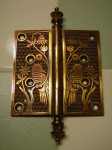
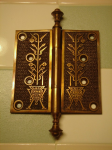
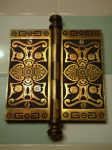
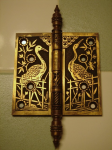
Re: brass/bronze Victorian hardware.....
I'll be happy to post some pics. I'll start
with hinges....bronze... and I'll try to
stay with the aesthetic flavor. All of these
items will be American made and circa 1875
to 1885. I know there is a limit of pics per
post so I will have multiple posts. I have
a lot of other figural stuff too, but for now
will try and stay with the aesthetic design as
this is how the post started in the first place!
stever
Brass/Bronze Victorian hardware
Archive summary
Other Antiques thread on victorianforum.com · started April 26, 2009 by stever · 29 posts, 56 image attachments · discussion in 2009.
Hi Zeke (and all), Sorry to have taken so long to reply, but am working far to many hours at the moment to be motivated when I come home to take pics! Re: statue--- yes, staying in the yard for now. it is a real beautiful yard object for sure! Re: brass/bronze Victorian…
Hi Zeke and all!
Will now send some door plate pics---all bronze, circa
1875-1885 with aesthetic design.
Will now send some door plate pics---all bronze, circa
1875-1885 with aesthetic design.
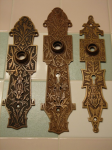
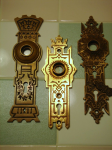
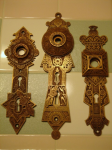
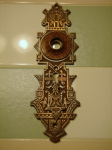
Hi again all---
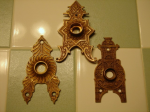
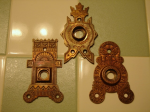
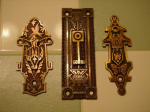
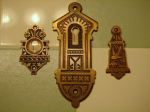
This post shows smaller triangular door plates
and individual keyholes. Many of you may have
already noticed many of these pieces match each other
and when they are assembled complete they are spectacular.
The Victorian's demanded many different pieces
to outfit their homes and the manufacturer's
of the day accomodated much like the automobile
manufacturer does today. There were pieces to fit
every imaginable need.
stever
This post shows smaller triangular door plates
and individual keyholes. Many of you may have
already noticed many of these pieces match each other
and when they are assembled complete they are spectacular.
The Victorian's demanded many different pieces
to outfit their homes and the manufacturer's
of the day accomodated much like the automobile
manufacturer does today. There were pieces to fit
every imaginable need.
stever
Last post----!
Knobs and pocket door hardware.
Note### the sunflower knob on the pic labeled
herter came with a lock and is marked Herter Brothers, New York.
Hope you have enjoyed.
stever
Knobs and pocket door hardware.
Note### the sunflower knob on the pic labeled
herter came with a lock and is marked Herter Brothers, New York.
Hope you have enjoyed.
stever
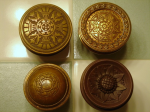
Stever, Very nice collection, some beautiful hardware. I see you have all pieces labeled by manufacturer. How is it that you know the maker of each? Are they marked, or by research/ old catalogs?
Hello Woodwright,
Yes, I labeled the pieces by manufacturer. There
are actually many sources to draw from in helping
identify these pieces. First of all, there is national
doorknob collector's club. known as ADCA, this club
has approx 250 members, has a quarterly newsletter and
has annual conventions. This year's convention is in Hartford,
Connecticut in July (same week as Brimfield). If you
are close, it would make for an interesting trip even
if you do not plan on making any purchases (yes, there
will be lots of hardware there for sale). The club has
an archive of original hardware catalogues which are
accessible to members for copying at practically cost.
It takes $25. yearly to join---and as one can only imagine---
there are many whom have joined simply for the information
gleaned from this library.
Fortunately, there are also several good books on this
subject by Maud Eastwood and Leonard Blumin (known
as the pioneers of this field). Another
book which was produced in the last several years
by Weber Wilson, has many good pictures, however
it also contains numerous errors which hurts the
novice collector in this field.
A great source of info is the U.S. Patent office(on-line).
About 6 years ago I had to have open heart surgery.
I was off from work for 6 weeks and one can only
watch movies and clean out the garage so many times before
you go crazy. I discovered the website at about week three and
went through hours of searching/copying the numerous
patents on hardware from the earliest to approx 1900.
I found it interesting that many designs were never patented
and as such many close copies were made by competing
companies.
Yes, many hardware pieces are marked---such as the
hardware lock I have marked Herter Brothers, New York
(actually probably made by Hopkins & Dickinson, N.Y.).
Unfortunately, most companies did not mark their wares
and I can only surmise it was due to pure economics
as this was usually hand applied. Notable exceptions were
the Metallic Compression Casting company of Boston,
early Russell & Erwin, Yale & Towne and Mallory
Wheeler & Co. As the industry
moved to the 1900's many more companies began
to mark items with their logos including Sargent,
Corbin, Chicago hardware, Reading Hardware and others.
Finally, experience also plays a factor. I have been collecting
hardware and Victoriana for 30 years or so. I am guessing
you have enjoyed working with wood for at least this long too.
I can tell when a piece has been made by a particular
manufacturer because i know the patterns, the different metallic
compositions, the items which are more susceptible to green verdigris,
the sizes of the knob shanks(yes they differ) just as you
know walnut from mahogany or oak from ash. Certainly I can
be wrong--- but many times I am not. I will never boast
though that i know it all as I am still learning in this field
and find items in my search that i cannot identify!
I hope I have answered your questions adequately. This
is a fascinating field and who knows--- perhaps hardware
is in your future!
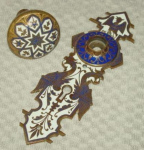
One last picture--- a favorite of mine...although not
aesthetic. Manufactured by the Corbin hardware company
1873-4, this knob and plate has hand applied enamel and was fired
much like cloisonne work. Available in many colors,
it was absolutely superior in design, execution
and simply stunning! Unfortunately, it was so expensive in
it's day and coupled with a national recession in 1874,
the company quit producing the line by the end of this year.
stever
Yes, I labeled the pieces by manufacturer. There
are actually many sources to draw from in helping
identify these pieces. First of all, there is national
doorknob collector's club. known as ADCA, this club
has approx 250 members, has a quarterly newsletter and
has annual conventions. This year's convention is in Hartford,
Connecticut in July (same week as Brimfield). If you
are close, it would make for an interesting trip even
if you do not plan on making any purchases (yes, there
will be lots of hardware there for sale). The club has
an archive of original hardware catalogues which are
accessible to members for copying at practically cost.
It takes $25. yearly to join---and as one can only imagine---
there are many whom have joined simply for the information
gleaned from this library.
Fortunately, there are also several good books on this
subject by Maud Eastwood and Leonard Blumin (known
as the pioneers of this field). Another
book which was produced in the last several years
by Weber Wilson, has many good pictures, however
it also contains numerous errors which hurts the
novice collector in this field.
A great source of info is the U.S. Patent office(on-line).
About 6 years ago I had to have open heart surgery.
I was off from work for 6 weeks and one can only
watch movies and clean out the garage so many times before
you go crazy. I discovered the website at about week three and
went through hours of searching/copying the numerous
patents on hardware from the earliest to approx 1900.
I found it interesting that many designs were never patented
and as such many close copies were made by competing
companies.
Yes, many hardware pieces are marked---such as the
hardware lock I have marked Herter Brothers, New York
(actually probably made by Hopkins & Dickinson, N.Y.).
Unfortunately, most companies did not mark their wares
and I can only surmise it was due to pure economics
as this was usually hand applied. Notable exceptions were
the Metallic Compression Casting company of Boston,
early Russell & Erwin, Yale & Towne and Mallory
Wheeler & Co. As the industry
moved to the 1900's many more companies began
to mark items with their logos including Sargent,
Corbin, Chicago hardware, Reading Hardware and others.
Finally, experience also plays a factor. I have been collecting
hardware and Victoriana for 30 years or so. I am guessing
you have enjoyed working with wood for at least this long too.
I can tell when a piece has been made by a particular
manufacturer because i know the patterns, the different metallic
compositions, the items which are more susceptible to green verdigris,
the sizes of the knob shanks(yes they differ) just as you
know walnut from mahogany or oak from ash. Certainly I can
be wrong--- but many times I am not. I will never boast
though that i know it all as I am still learning in this field
and find items in my search that i cannot identify!
I hope I have answered your questions adequately. This
is a fascinating field and who knows--- perhaps hardware
is in your future!
One last picture--- a favorite of mine...although not
aesthetic. Manufactured by the Corbin hardware company
1873-4, this knob and plate has hand applied enamel and was fired
much like cloisonne work. Available in many colors,
it was absolutely superior in design, execution
and simply stunning! Unfortunately, it was so expensive in
it's day and coupled with a national recession in 1874,
the company quit producing the line by the end of this year.
stever

Stever, Wow! That set is spectacular - I've never seen anything quite like it - very impressive.
A very thorough and informative answer to my question - much more than I expected. You sound passionate and very knowledgeable about the subject. You are correct in your assumption - I have been working with wood for 30 years (25 professional + 5 amateur) and if you are passionate about something, you have a thirst to learn all that you can about the subject - although no one knows everything about anything, there are always new discoveries to be made. I have never collected door hardware, but can certainly appreciate the details and designs involved in them. I really enjoy seeing your collection. woodwright
A very thorough and informative answer to my question - much more than I expected. You sound passionate and very knowledgeable about the subject. You are correct in your assumption - I have been working with wood for 30 years (25 professional + 5 amateur) and if you are passionate about something, you have a thirst to learn all that you can about the subject - although no one knows everything about anything, there are always new discoveries to be made. I have never collected door hardware, but can certainly appreciate the details and designs involved in them. I really enjoy seeing your collection. woodwright
Stever!
I’m in awe, your collection is incredible. In my travels I see a lot of brass hardware but nothing like this, you have the best of the best. I can certainly understand your passion for these things, they’re all so beautiful. I’m honestly lost for words. Thank you so much for taking the time and effort to post all these and for your lengthy and informative comments. I put all the pics in a folder for my personal reference.
I’m in awe, your collection is incredible. In my travels I see a lot of brass hardware but nothing like this, you have the best of the best. I can certainly understand your passion for these things, they’re all so beautiful. I’m honestly lost for words. Thank you so much for taking the time and effort to post all these and for your lengthy and informative comments. I put all the pics in a folder for my personal reference.
thanks woodright and zeke... appreciate your comments.
it is really hard to "not post more," as although i like all of
the items you have seen, i have many others which i really like
more (except for the 1874 corbin enamel). my favorite
years of hardware production and design are really a bit earlier
then the 1880's aesthetic designs. from 1869-to the late
1870's are what i consider the "golden" years of hardware
production and these pieces really have no equal in design,
quality of manufacture or visual appeal. the neo-grec design of this era
fits right in with my love for renaissance revival type furniture too!
stever
it is really hard to "not post more," as although i like all of
the items you have seen, i have many others which i really like
more (except for the 1874 corbin enamel). my favorite
years of hardware production and design are really a bit earlier
then the 1880's aesthetic designs. from 1869-to the late
1870's are what i consider the "golden" years of hardware
production and these pieces really have no equal in design,
quality of manufacture or visual appeal. the neo-grec design of this era
fits right in with my love for renaissance revival type furniture too!
stever
Really gorgeous hardware. As a cabinet hardware fan, i have been researching early American hardware lately and have found it tough going. What interests me is the locks, made of iron in the 17th & 18th century, any ideas where i could find info on this?
One interesting article i did find on iron nails by Greg LeFever notes that in early america, nails were so valuable that home owners moving to another location, burned their buildings down to recover the nails. Indeed, in 1645 the Virginia House of Burgesses passed a law offering to give the home owner as many nails as he used in construction of the buildings in an effort to stop this practice.
Act VII
http://www.vagenweb.org/hening/vol01-12.htm#page_291
Article by Lefever on iron nails
http://www.gregorylefever.com/pdfs/Early%20Nails%202.pdf
One interesting article i did find on iron nails by Greg LeFever notes that in early america, nails were so valuable that home owners moving to another location, burned their buildings down to recover the nails. Indeed, in 1645 the Virginia House of Burgesses passed a law offering to give the home owner as many nails as he used in construction of the buildings in an effort to stop this practice.
Act VII
http://www.vagenweb.org/hening/vol01-12.htm#page_291
Article by Lefever on iron nails
http://www.gregorylefever.com/pdfs/Early%20Nails%202.pdf
Steve, we're willing to visually gobble up as much photos as you can post. You can post them here or I can do a gallery on RV like this one: http://rarevictorian.com/2009/04/herter-brothers-bonhams-sale-warner-brothers.html
Stever,
More hardware please!
Do you know how to tell the difference between a vintage sargent Ekado pattern doorknob and a repro one. I am of the understanding these are being currently manufactured. I would very much appreciate any hints!
Zeke
More hardware please!
Do you know how to tell the difference between a vintage sargent Ekado pattern doorknob and a repro one. I am of the understanding these are being currently manufactured. I would very much appreciate any hints!
Zeke
hi zeke---
have not forgotten you and the rest of rare victorian! i have
been working long hours and unfortunately the net result
is that by the time i get home i have lost some motivation.
i intend to post more pics soon so hang in there!
sargent's ekado is a very desireable aesthetic pattern and as
such has been reproduced my several "copiers" in the industry.
clarity of design is the first thing to look for. the design needs
to be clear and sharp. the edge of the knob will be reeded like
a coin (in the flat/drum shape form) and the reeding is super
fine and crisp.the shank of the knob will have a square hole to
accommodate a square spindle shaft. it will not be tapped to
accommodate a screw on spindle shaft. the knob attaches
to the shaft with a single set screw. fortunately, the
design will also carry a patent date of aug18,85, with the sargent
name cast into the plates, hinges, rosettes, push plates, pocket pulls
etc. unfortunately the knobs are not marked. one can also
help discern a reproduction by the weight of the knob.
these knobs carry good weight but poorly made reproductions
almost always weigh a good deal more then the original.
the original was made in 3 pieces and pressed together
where the repo is generally cast as a single piece--and
usually with poor casting.
i know of few good reproductions in the market place.
almost all are inferior to the original. the only maker (not copier)
of hardware that in my estimation is better then the
original--or certainly their equal are manufactured
by e.r. butler & company, new york. you will find no equal
but no worries---he does not have an ekado line!
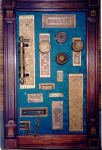
i will try and send a display pic of ekado, but not certain
if it will turn out. will be back again soon,
stever
have not forgotten you and the rest of rare victorian! i have
been working long hours and unfortunately the net result
is that by the time i get home i have lost some motivation.
i intend to post more pics soon so hang in there!
sargent's ekado is a very desireable aesthetic pattern and as
such has been reproduced my several "copiers" in the industry.
clarity of design is the first thing to look for. the design needs
to be clear and sharp. the edge of the knob will be reeded like
a coin (in the flat/drum shape form) and the reeding is super
fine and crisp.the shank of the knob will have a square hole to
accommodate a square spindle shaft. it will not be tapped to
accommodate a screw on spindle shaft. the knob attaches
to the shaft with a single set screw. fortunately, the
design will also carry a patent date of aug18,85, with the sargent
name cast into the plates, hinges, rosettes, push plates, pocket pulls
etc. unfortunately the knobs are not marked. one can also
help discern a reproduction by the weight of the knob.
these knobs carry good weight but poorly made reproductions
almost always weigh a good deal more then the original.
the original was made in 3 pieces and pressed together
where the repo is generally cast as a single piece--and
usually with poor casting.
i know of few good reproductions in the market place.
almost all are inferior to the original. the only maker (not copier)
of hardware that in my estimation is better then the
original--or certainly their equal are manufactured
by e.r. butler & company, new york. you will find no equal
but no worries---he does not have an ekado line!
i will try and send a display pic of ekado, but not certain
if it will turn out. will be back again soon,
stever
Hey Stever,
Thanks so much for your very concise answer and your display of the hardware looks great. You don't live in New Jersey do you? I would love to see your collection!
My knob set is a single casting but great quality. I guess it's a repro, but I got it cheap at a outdoor flea market and it looks great on the door we put it on. The quality of the reeding on the edge is very convincing and it sure fooled me.
I picked up the book "Antique Hardware price guide" by Wilson and I'm becoming absolutely fascinated by all this wonderful stuff. Many thanks for all you've contributed to these boards, it is very much appreciated.
Zeke
Thanks so much for your very concise answer and your display of the hardware looks great. You don't live in New Jersey do you? I would love to see your collection!
My knob set is a single casting but great quality. I guess it's a repro, but I got it cheap at a outdoor flea market and it looks great on the door we put it on. The quality of the reeding on the edge is very convincing and it sure fooled me.
I picked up the book "Antique Hardware price guide" by Wilson and I'm becoming absolutely fascinated by all this wonderful stuff. Many thanks for all you've contributed to these boards, it is very much appreciated.
Zeke
Hello to all!
I am trying to get caught up on adding more pics to this file.
Since I last posted, the annual Antique Doorknob Collector's
of America (ADCA) held their annual convention in Hartford,
Connecticut. It was my first visit to Hartford and if one is
traveling in this area the Connecticut state capital building
is a must see. I am certain there are not too many more
buildings in America which can compare. The tour is on your
own and free. Do not miss this Victorian beauty in all of its'
splendor. To me, it was just as nice as the Library of Congress
in Washington D.C.
While attending the convention I had hoped a few of you
might show up, but no one introduced themselves as a Rare
Victorian follower! I did attend Brimfield for two days also
and I'll bet some of you were there too. It was my first
time and I was surprised in many ways. I had expected
to find much more hardware (little at best) and I was
also hoping to see more high end Victorian furniture. I
have heard that the summer show is not the best to attend,
but it was just too convenient to not go! I had a good time
and spent plenty.... I hope to attend again someday.
Back to the post......
When I last sent pics I showed a variety of aesthetically themed
pieces. This time i will be sending a bit of everything. I had stated
I would send some of my favorites, but once I began to organize
pictures I realized the breadth of hardware types was more
then just a few pics could show. As such, I will list multiple
pics and posts. If there continues to be interest I'll photograph
more as I believe I could fill many pages here. As to content,
I will only send pics of items I own or originally owned. If you have
any questions I'll be glad to answer to the best of my ability. If
any has enough interest to join the ADCA i will help facilitate
this too.
note### First post is Yale and Towne circa 1885-1900
stever
I am trying to get caught up on adding more pics to this file.
Since I last posted, the annual Antique Doorknob Collector's
of America (ADCA) held their annual convention in Hartford,
Connecticut. It was my first visit to Hartford and if one is
traveling in this area the Connecticut state capital building
is a must see. I am certain there are not too many more
buildings in America which can compare. The tour is on your
own and free. Do not miss this Victorian beauty in all of its'
splendor. To me, it was just as nice as the Library of Congress
in Washington D.C.
While attending the convention I had hoped a few of you
might show up, but no one introduced themselves as a Rare
Victorian follower! I did attend Brimfield for two days also
and I'll bet some of you were there too. It was my first
time and I was surprised in many ways. I had expected
to find much more hardware (little at best) and I was
also hoping to see more high end Victorian furniture. I
have heard that the summer show is not the best to attend,
but it was just too convenient to not go! I had a good time
and spent plenty.... I hope to attend again someday.
Back to the post......
When I last sent pics I showed a variety of aesthetically themed
pieces. This time i will be sending a bit of everything. I had stated
I would send some of my favorites, but once I began to organize
pictures I realized the breadth of hardware types was more
then just a few pics could show. As such, I will list multiple
pics and posts. If there continues to be interest I'll photograph
more as I believe I could fill many pages here. As to content,
I will only send pics of items I own or originally owned. If you have
any questions I'll be glad to answer to the best of my ability. If
any has enough interest to join the ADCA i will help facilitate
this too.
note### First post is Yale and Towne circa 1885-1900
stever
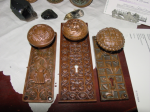
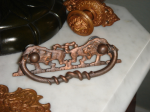
Second post---
More 1885-1900ish hardware. Multiple manufacturers.
Stever
More 1885-1900ish hardware. Multiple manufacturers.
Stever
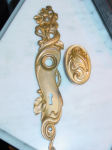
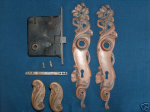
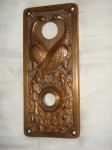
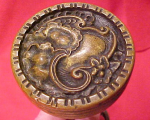
Third post-
Corbin hardware, circa 1870-1885
stever
Corbin hardware, circa 1870-1885
stever
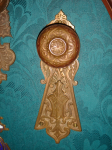
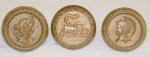
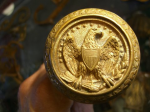
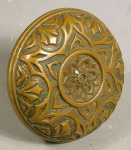
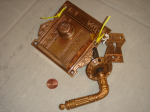
Fourth post -
More Corbin of same vintage.
Last pic has a MCCC/R&E door bell plate too.
stever
More Corbin of same vintage.
Last pic has a MCCC/R&E door bell plate too.
stever
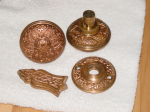
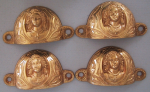
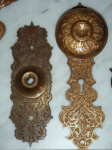
Fifth post--
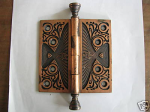
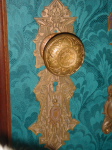
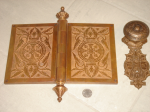
Metallic Compression Casting Co. (Boston) / Russell & Erwin circa 1870-1885
note#### size of door hinge in relationship to full sized entry knob
and plate. this hinge is mammoth. (6 hinges purchased / Pennsylvania
Victorian double door entry way / 11 foot tall, 3 inch think walnut. I was told the
doors were cut down.)
stever
Metallic Compression Casting Co. (Boston) / Russell & Erwin circa 1870-1885
note#### size of door hinge in relationship to full sized entry knob
and plate. this hinge is mammoth. (6 hinges purchased / Pennsylvania
Victorian double door entry way / 11 foot tall, 3 inch think walnut. I was told the
doors were cut down.)
stever
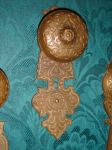
Sixth post-
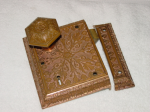
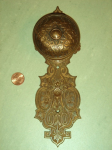
More R&E/MCCC.
Note### The large rim lock and hex knob were often
found on railroad boxcars.
stever
More R&E/MCCC.
Note### The large rim lock and hex knob were often
found on railroad boxcars.
stever
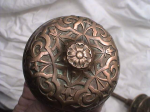
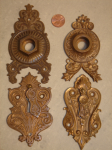
Seventh post-
Misc pieces and manufacturers
stever
Misc pieces and manufacturers
stever
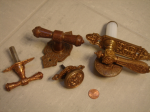
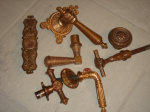
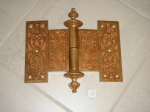
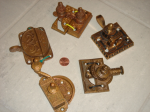
Eighth post -
Misc pics, labled in description.
stever
Misc pics, labled in description.
stever
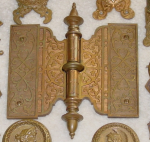
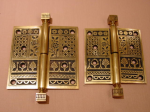
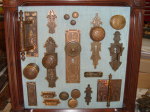
Ninth post and last for today.
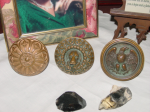
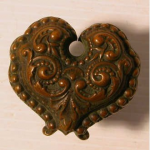
Beautiful Russell & Erwin circa 1890 "heart" knob
and a pic of several figural knobs.
HOPE YOU ENJOY!
stever
Beautiful Russell & Erwin circa 1890 "heart" knob
and a pic of several figural knobs.
HOPE YOU ENJOY!
stever
Very impressive collection Stever! It's easy to see how someone could be drawn to collect Victorian Brass/ Hardware. It's gorgeous w/ great details & very diverse in style and design. Thanks for posting the pics. Nice eye candy. woodwright
Zeke---
Not so fast on the Ekado as a repro....
Look at the shank where it becomes part of the
base of the knob. Is this part "reeded" too?
on the flat top of the "smaller circle" you should
find a small round dot that appears to be made
of a slightly different metallic composition. If this
is there, then it is undoubtedly genuine. That dot---
is actually a pin which holds the body and the shank
together. If the pin were drilled or driven
out the shank would unscrew from the body.
I'll send some pics if you want.
Stever
Not so fast on the Ekado as a repro....
Look at the shank where it becomes part of the
base of the knob. Is this part "reeded" too?
on the flat top of the "smaller circle" you should
find a small round dot that appears to be made
of a slightly different metallic composition. If this
is there, then it is undoubtedly genuine. That dot---
is actually a pin which holds the body and the shank
together. If the pin were drilled or driven
out the shank would unscrew from the body.
I'll send some pics if you want.
Stever
Hi there,
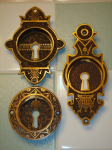
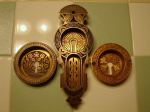
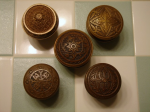
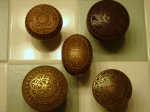
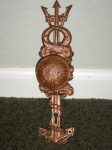
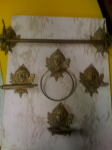
This is a bit off subject, but maybe you could help me identify these peices of brass hardware?
They are solid brass and appear to be very old, but I am not sure. If you can help, I'd love to know more about them.
Thanks,
Shay
This is a bit off subject, but maybe you could help me identify these peices of brass hardware?
They are solid brass and appear to be very old, but I am not sure. If you can help, I'd love to know more about them.
Thanks,
Shay

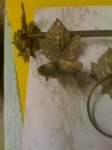
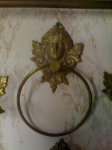
Hi Shay-
Hard to say as the pics are fuzzy, but the design/casting does
not appear to be crisp. Your bathroom hardware appear
to be reproduction pieces from a time much newer then
what they represent. Never the less they are still pleasing
to the eye and would like nice in a Victorian bathroom setting.
Do the pieces have any manufacturer marks?
Stever
Hard to say as the pics are fuzzy, but the design/casting does
not appear to be crisp. Your bathroom hardware appear
to be reproduction pieces from a time much newer then
what they represent. Never the less they are still pleasing
to the eye and would like nice in a Victorian bathroom setting.
Do the pieces have any manufacturer marks?
Stever
Does anyone else think Stever needs to start a Victorian hardware blog :)
Thanks for the reply. I took the pics with a cell phone. They are pretty detailed, but very dirty from being in my attic waiting to be used. Unfortunately, I don't have my victorian home anymore, (long story) so I have no idea what I'll do with them.
They do not have any marks, unfortunately. But, as you say, they are very pleasing. I'd love to know more about them.
Thanks again for the reply, and for all the great info and pics in this thread. I agree, you should definitely start a blog.
Shay
They do not have any marks, unfortunately. But, as you say, they are very pleasing. I'd love to know more about them.
Thanks again for the reply, and for all the great info and pics in this thread. I agree, you should definitely start a blog.
Shay